The much-loved Cheltenham Music Festival is following Mental Health Awareness Week by making the case for classical music’s role in promoting emotional wellbeing.
The Festival, hosted by the charity - Cheltenham Festivals, celebrates it’s 81st birthday in July. It is pointing to the benefits of live classical music during a week in which Britons are being asked to “take action” on mental health.
With the Mental Health Foundation reporting that only 13% of people say they live with good mental health, Jack Bazalgette, the Festival’s Artistic Director, says that this summer’s programme at Cheltenham will prioritise togetherness, connection, and being present.
“There’s lots of research to demonstrate the impact of music on emotional wellbeing, and what happens here in July is really magical,” he says. “Classical music is often seen as a world where you need prior knowledge and have to act in a specific way, but really it’s about shared emotional experiences, putting away our phones – and being present with each other.
Among other research, the Jed Foundation, a leading non-profit focussed on youth mental health, has found that “music without lyrics, such as classical music, can be crucial to helping process confusing or difficult emotions.” Meanwhile, a Royal Philharmonic Orchestra study found that 35% of people felt more relaxed and 18% felt their mood lifted by listening to orchestral music.
“Music has such power, and I’m passionate about its benefits for us,” adds Bazalgette. “Every year, we all gather in a beautiful town in the Gloucestershire countryside, take a breath and listen to wonderful sounds together. It’s such a special experience.”
“Amazing benefits”
One of this year’s star turns at the Festival will be Pavel Kolesnikov, an internationally acclaimed pianist who will be performing all of the Nocturnes by the nineteenth-century composer Frédéric Chopin. The rare show will itself be a memorable event, say organisers.
“I am often asked if a pianist is a lonely occupation,“ says Kolesnikov. “My answer may sound rather strange, but one thing is clear - communication somehow has the central place in this mysterious activity.
“Even when there is no one else in the room I am playing to someone. I reach out to a listener, be it a concrete or imaginary person. It is someone I’ve just seen or am about to see; or a distant friend I haven’t spoken to for months; or my parents far away in Siberia; someone I lost touch with; someone who is no longer there. Sometimes it is not a person but something beyond - a divinity, a spirit, an idea. Regardless, music always has an address, it is a living link.
“I believe in the truthfulness of this connection, which in our fragmented time appears more precious and meaningful than ever.”
Without amplification and other technology, classical music concerts offer a real “digital detox,” adds Bazalgette, who doubled Cheltenham Music festival’s year-on-year audience in 2025 and also promotes classical music via the London-based collective through the noise.
“The average age of our audience at those concerts is twenty-seven,” he says. “There’s a huge appetite among the young for classical music – because they experience the amazing benefits of gathering together in a beautiful space to experience this really human thing, music.
“At its best, classical music simply lifts burdens from people’s shoulders – you see it and feel it happen in concerts like Pavel’s, they’re transporting.”
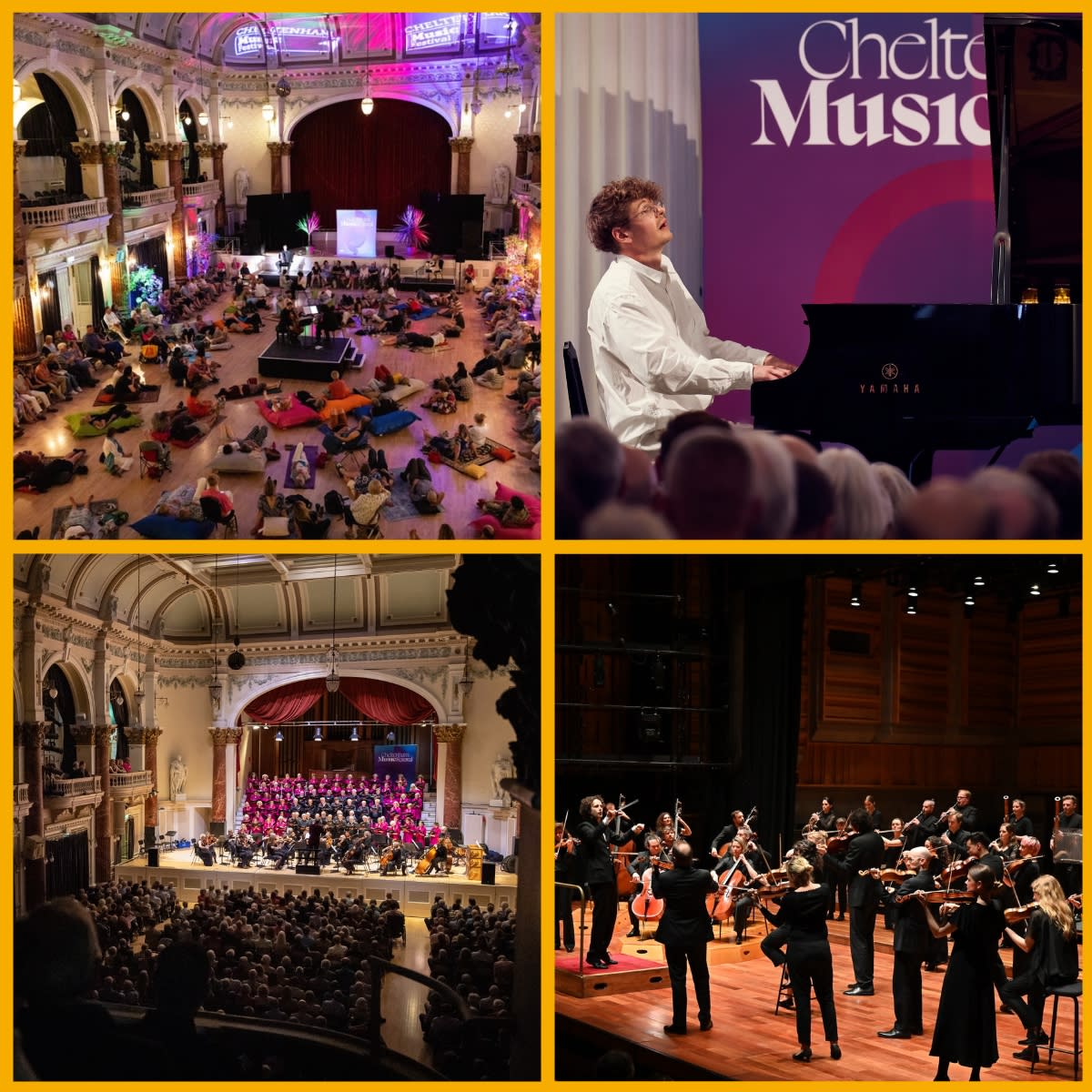 Images by Still Moving Media for Cheltenham Festivals
“Leave behind your preconceptions”
Dr Marieke Navin – Head of Programming for Cheltenham Science Festival, which sits under the same parent charity, Cheltenham Festivals – agrees. “I have previously undertaken research on music and wellbeing – and there are clear links,” she says.
“There is now a strong body of scientific evidence showing that music and singing can support wellbeing, from helping us manage our emotions to strengthening social connection and reducing loneliness.”
Cheltenham Science Festival 2026 takes place in June, and speakers will discuss among other topics both the impact of soundwaves on the brain - and the value of ‘analogue’ moments to help burned-out Brits switch off and reconnect. Bazalgette says July’s Music Festival is the ideal opportunity to take action to do exactly this.
“The Mental Health Foundation is encouraging us all this year not just to raise awareness of mental health – but take concrete action to make a positive impact,” he says.
“This year, Cheltenham Music Festival is one place to do that: leave behind your preconceptions about classical music and come down. Connect with other humans, turn off your phone … and open yourself to some positive vibes.”
Dates for your calendar
Cheltenham Music Festival, 3-11 July 2026
Cheltenham Science Festival, 2-7 June 2026

- Sandford Park
- Sep 19, 2026 - Sep 20, 2026

- Sandford Park
- Sep 25, 2026 - Sep 26, 2026
- Sandford Park
- Sep 26, 2026 - Sep 27, 2026


- Cheltenham Racecourse
- Oct 23, 2026 - Oct 24, 2026

- Cheltenham Racecourse
- Nov 13, 2026 - Nov 15, 2026



- Cheltenham Racecourse
- Mar 16, 2027 - Mar 19, 2027
- Cheltenham Playhouse Theatre
- Apr 15, 2027 - Apr 24, 2027